


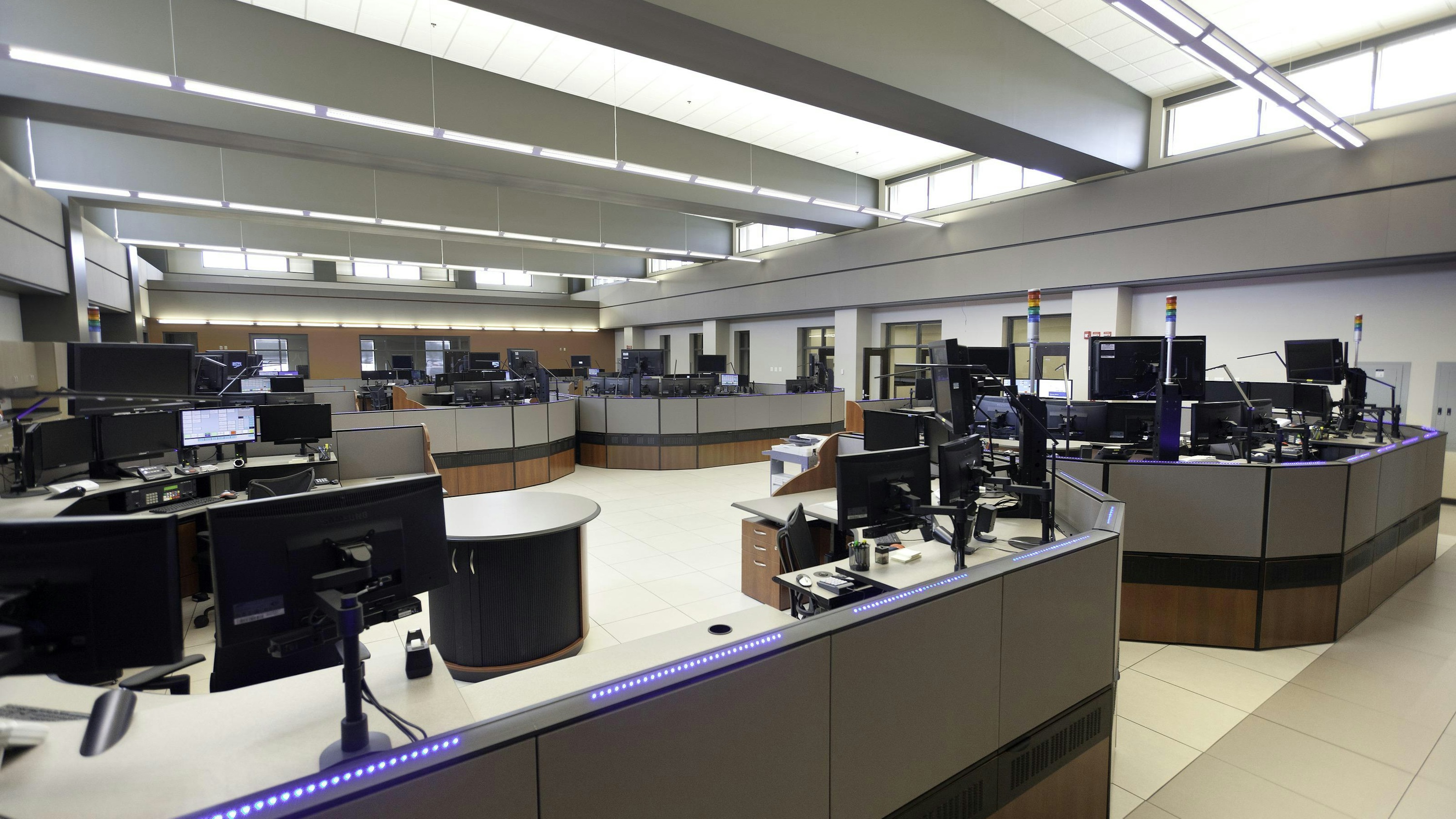

Communities rely on critical facilities to remain operational when everything else is uncertain. Whether responding to severe weather, coordinating emergency services or maintaining continuity of government, these buildings must be designed to withstand disruption.
At Wold, we know that level of resilience is the result of intentional design decisions that strengthen buildings from the inside out. In part one of this series, we discussed repurposing resilient buildings for emergency response efforts. In part two below, we’ll discuss our holistic approach to resilient design, where we integrate architecture, engineering and operational planning to protect people and support essential services when communities need them most.
Rather than applying a one-size-fits-all approach, resilient facilities are designed around the realities of their environment. Along the Gulf Coast, resilience may mean preparing for hurricanes. In the Mountain West, it may center on wildfires. Northern communities often prioritize extreme snow and ice, while other regions focus on tornadoes, flooding or other seismic events. Designers must look beyond minimum code requirements and ask a more important question: How can this building continue operating when the community needs it most?
For these mission-critical assets, resilience is often built around five complementary design principles: hardening, redundancy, flexibility, employee wellness and future growth. Together, these considerations create buildings that enable critical operations to continue in moments of acute crisis.
A strong building begins with durable construction that reflects local hazards. That might include hardened exterior walls, impact-resistant glazing or roofing systems designed to withstand high winds and hail. In wildfire-prone regions, fire-resistant materials and defensible landscaping can help reduce vulnerability. For rural communities that regularly experience severe weather, heavier-gauge exterior materials often provide greater long-term durability while reducing maintenance demands.
These decisions may seem incremental individually, but together they create a building envelope capable of protecting occupants, equipment and critical operations when conditions deteriorate.
It’s imperative to choose systems and materials that solve multiple problems. Historically, resilience and sustainability have been viewed as competing priorities. Today, they're increasingly recognized as complementary goals. The Scott County Emergency Communications Center in Iowa demonstrates how both objectives can be achieved within a single project. Designed as one of the nation’s first LEED Gold-certified 911 centers, it combines hardened infrastructure with geothermal heating and cooling and high-performance building systems. The result is a mission-critical facility that removes a single point of failure, supports continuity of operations and reduces long-term operating costs and maintenance demands.
Simple strategies through site planning can improve safety and emergency response long before someone reaches the front door. Fire-resistant landscape buffers, protected emergency access routes and designated snow storage areas all help facilities remain serviceable during severe weather that can force new workflows.
Thoughtful site planning minimizes operational disruptions, allowing response teams to focus on emergency response rather than facility recovery. Indoor fleet and squad parking protects emergency vehicles and their equipment from extreme temperatures, reducing wear, repair and replacement costs while supporting faster response. These protections are especially valuable in areas where wildfires are an increased concern, and Public Safety Power Shutoffs place additional demands on emergency personnel. Wold has incorporated these strategies into utility vehicle storage facilities in Illinois specifically to improve response times during severe weather.
Emergency-ready planning requires more than hardened infrastructure. It also means creating environments that help first responders, government personnel and residents seeking assistance make sound decisions and maintain focus during high-stress situations.
Clear circulation, intuitive wayfinding, accessible spaces and comfortable gathering areas all contribute to better decision-making during emergencies. These same features improve the daily experience for employees and visitors, reinforcing that resilient design delivers value long before an emergency occurs.
Purpose-built, mission-critical facilities like the State of Minnesota State Emergency Operations Center and Lake Regional Operations & Communications Facility in Illinois increasingly incorporate design strategies that support staff well-being during long operational periods, including daylighting that minimizes glare, quiet mechanical systems, durable materials and stable indoor environments. At Lake Regional, biophilic materials further connect staff to natural elements within the workplace. These features support focus, endurance and employee retention while strengthening operational performance.
True resilience extends beyond preparing for today’s challenges; it requires anticipating the changes and demands that may emerge years or decades later. Emergency operations should evolve as communities grow, agencies consolidate and new technologies reshape how teams work. Designing only for today's needs can leave mission-critical facilities struggling to adapt when those changes occur.
Planning for future expansion from the outset can make that evolution easier and more cost-effective. Flexible infrastructure, adaptable workspaces and strategic decisions about building organization can allow facilities to accommodate additional staff, equipment or functions without disrupting critical operations. By considering both immediate requirements and long-term possibilities, communities can create facilities that continue supporting their missions as needs change.
Communities can't predict every emergency, but they can prepare spaces that are ready to respond. From durable materials and resilient sites to employee-focused interiors and sustainable infrastructure, every design choice contributes to a facility's ability to perform when it matters most.
As communities continue investing in the next generation of civic infrastructure, resilient design offers an opportunity to create buildings that are safer, smarter and better prepared for an uncertain future. Ready to get started? Let's continue building spaces that are ready for whatever comes next.


