
Communities across the country are facing a growing range of emergencies, from severe weather events and wildfires to public health crises and infrastructure disruptions. According to NOAA, the United States experienced an average of 4.4 billion-dollar disasters annually from 2020-24, while wildfires alone accounted for 14 of 17 federally declared disasters during the last five years.
This reality is reshaping how communities approach civic infrastructure. Increasingly, leaders are looking beyond traditional emergency operations centers (EOCs) and exploring how a broader range of government facilities can support emergency response, continuity of operations and community recovery. Resilient, flexible facilities are now a fundamental component of good governance.
Thoughtful planning and design can help municipal spaces serve these critical functions during daily operations and emergencies. Whether through adaptable layouts, multi-purpose gathering spaces or hardened infrastructure, today’s facilities are designed to do more when communities need them most.
Historically, EOCs have served as centralized hubs for coordination, communication and decision-making during crises. While those functions remain essential, communities are recognizing that emergency preparedness extends beyond a single facility. As communities rethink the role of civic infrastructure, four key design strategies are emerging to help communities expand the role of facilities during emergencies to shelter residents, maintain government operations and coordinate resources:
Areas that can rapidly transition from everyday use to emergency operations are one of the most effective approaches to preparedness and help maximize the value of public investment. Council chambers, community rooms and event rooms can be quickly configured to support emergency command functions when needed, providing additional operational capacity without relying on dedicated facilities that may see limited use outside of crisis situations.
Emergency response often requires facilities to accommodate a diverse range of users, from first responders and government staff to support personnel and displaced residents. Multi-use facilities balance everyday civic functions with emergency preparedness, enabling spaces to support training, public safety operations, community events and crisis response as needed.
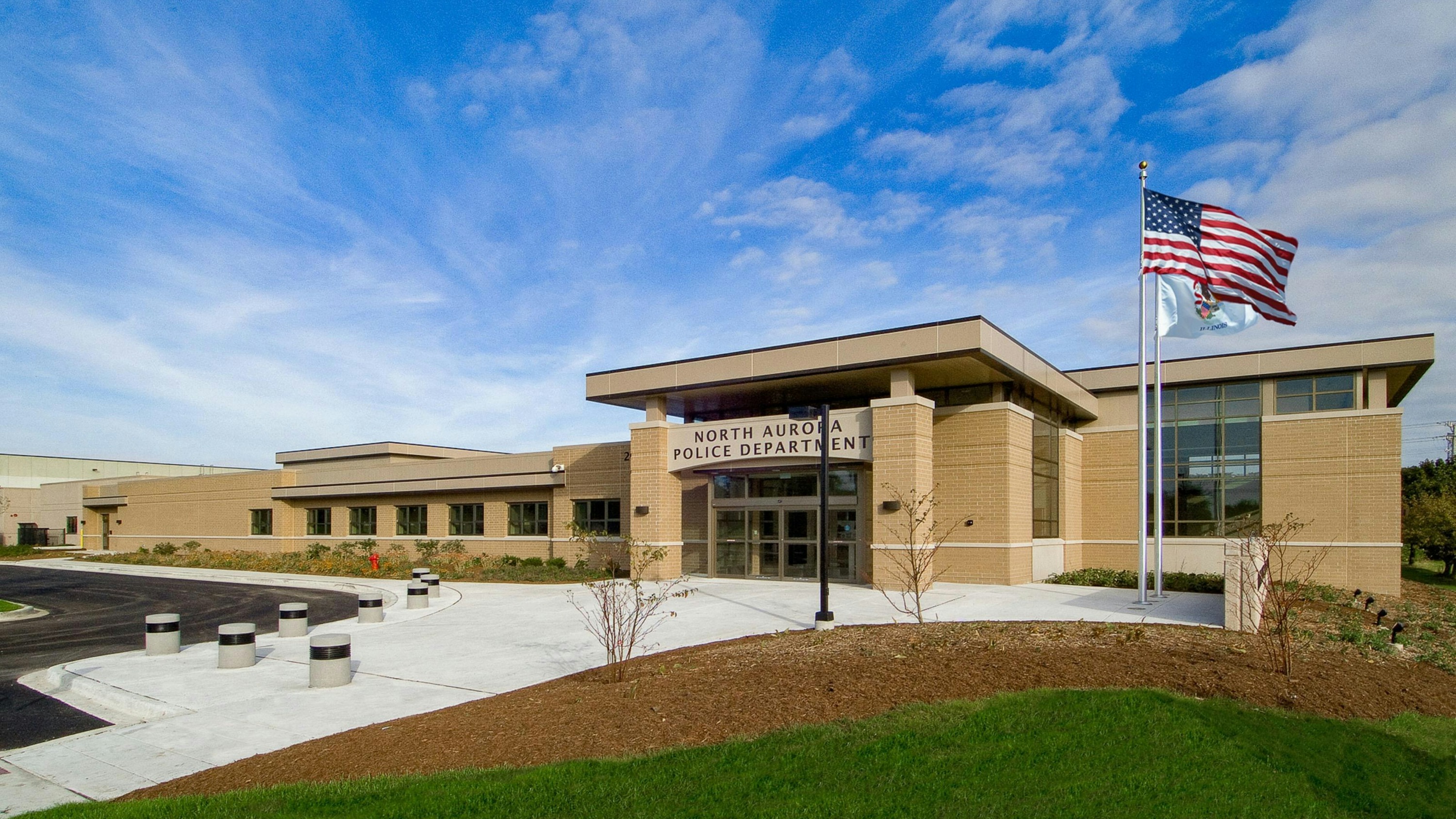
A preliminary public safety concept in Colorado Springs explored an integrated approach that combines police, fire and emergency operations functions with a coordinated facility. Likewise, the North Aurora Police Department in Illinois incorporates a community and training room that can transition into an emergency operations center when needed. The facility also demonstrates how emergency preparedness can be integrated into spaces not traditionally associated with crisis response. Its standalone firing range, while designed outside Risk Category IV requirements, was strategically planned to serve as a warming shelter during extreme cold-weather events.
Not every emergency facility is designed to function as a command center. In many cases, communities benefit most from identifying and enhancing buildings that can serve as safe havens during emergencies. Schools, utility facilities, public works buildings and fire stations often play this essential role during severe weather events and other crises. These facilities provide shelter, support critical operations and serve as resource distribution points while maintaining clear separation between public-facing functions and secure operational areas. Thoughtful planning can transform a wide range of community assets into critical components of a broader emergency response network.
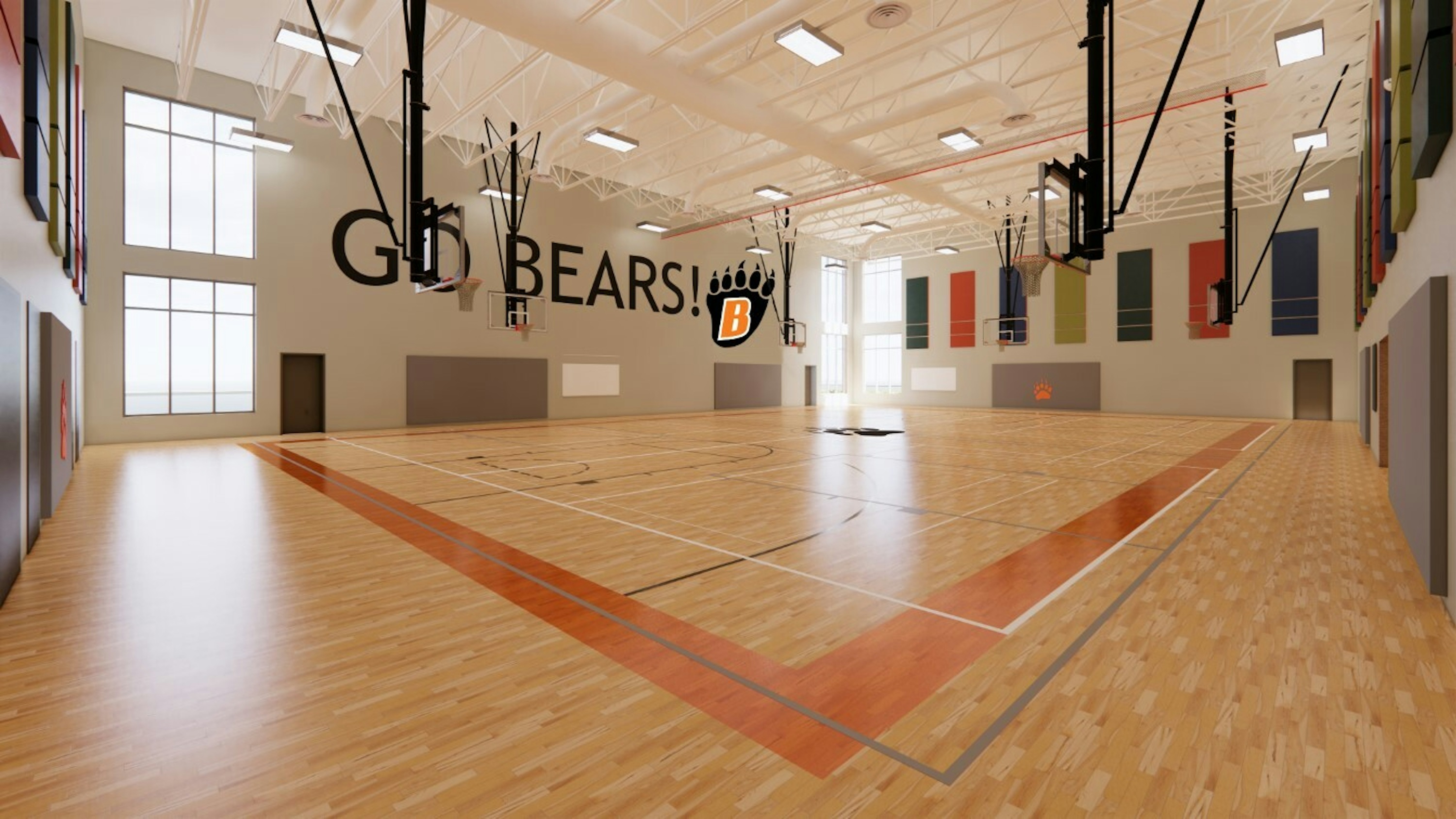
At North Star Elementary School in White Bear Lake, Minnesota, the gymnasium was designed to convert into a storm shelter and includes storm-rated windows. Nearby, Matoska International IB World School incorporates storm-rated coiling doors within classroom areas to provide additional protection during severe weather events.
While some facilities are designed to welcome the public during emergencies, others must remain secure and operational behind the scenes. Police departments, 911 centers and dedicated emergency operations centers play a vital role in maintaining continuity of government and coordinating response efforts. These facilities require specialized design strategies that prioritize security, redundancy and operational resilience.
Preparedness-focused facilities are designed to remain functional even under extreme conditions, ensuring that essential services continue uninterrupted. This may include hardened building envelopes, backup power systems, redundant communications infrastructure and carefully considered site selection. The Minnesota State Emergency Operations Center exemplifies this approach. Rather than locating the facility adjacent to the State Capitol, planners intentionally selected a separate location to ensure continuity of operations in the event of a catastrophic incident affecting the Capitol complex.
Similarly, the Hohenwald Emergency Operations Center in Tennessee incorporates resilience-focused features, including redundant power systems, hardened exterior walls designed to withstand debris impacts and ballistic-rated windows with hurricane-resistant framing. By protecting mission-critical functions, communities strengthen their ability to respond effectively and recover more quickly when emergencies occur.
Emergency facilities are more than buildings. They are lifelines that help communities navigate uncertainty, protect critical operations and support recovery when disruption occurs. As communities continue to face evolving climate, infrastructure and public safety challenges, Wold helps local governments identify opportunities to transform civic facilities into resilient assets that support both everyday service and emergency response when it matters most. Get in touch with our team today to start planning.


