Courthouse design often focuses on public experience, security and technological modernization, but for those responsible for administering justice, one factor ties all of these together: circulation. How people move through a courthouse directly impacts safety, fairness and the procedural integrity of judicial proceedings.
For decades, courthouse design has shifted to an emphasis on maintaining three distinct circulation paths: public, staff and in‑custody. This isn’t simply a best practice; it’s essential to preserving decorum, protecting juror impartiality and ensuring defendants receive a fair hearing free from undue influence. When these paths overlap, it can compromise safety and, in some instances, even risk mistrial.
One of the most complex circulation challenges is the movement of individuals in custody from jail to the courtroom. Movement should be minimized and every transition – hallway, elevator, holding room or courtroom entry – must work seamlessly to minimize security risks, reduce staffing demands and uphold the separation deemed a standard in modern court operations. Wold partners with counties across the country to address these challenges, helping jurisdictions balance legal requirements, operational intent and the needs of aging or historic buildings.
Three-zone circulation is a foundational component of modern courthouse operations, but with courthouses often having a life of over a century and being the historic heart of a community, achieving this standard can be challenging.
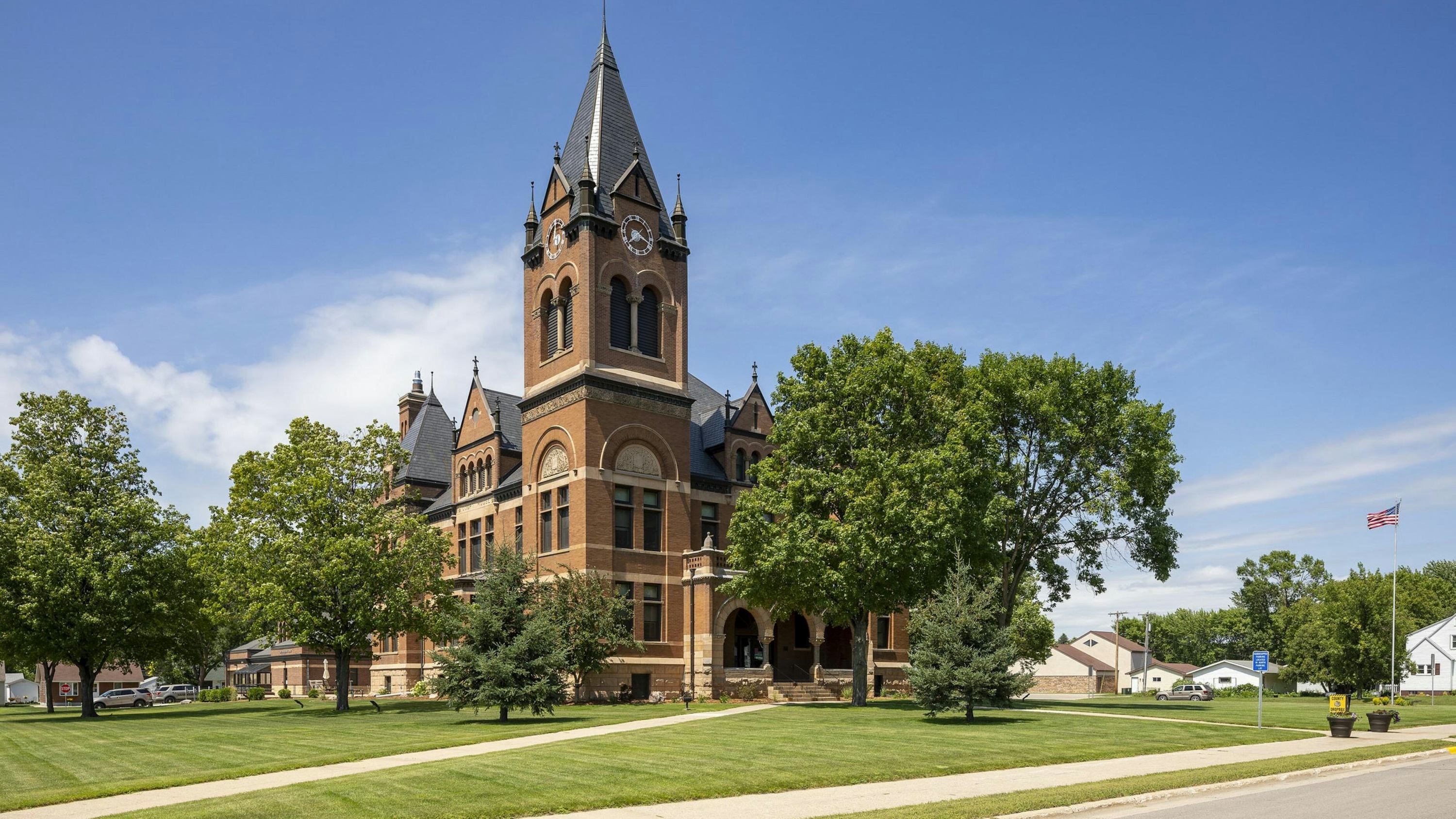
Wold’s work in Swift County, Minnesota, for example, involved reinventing circulation within a historic courthouse on the national register. By renovating the interior while preserving the historic character of public circulation spaces, Wold created three zones of circulation with minor compromises requiring coordination of staff and in-custody movement, a significant improvement that respected the building while modernizing its ability to administer fair and equitable justice.
Wold’s court facility work often centers on reducing the distance individuals must travel between jail and courtroom, a key factor in minimizing risk and staffing needs.
An underground tunnel links the new annex to the existing jail, allowing individuals in custody to move entirely within secure circulation. Once they enter the tunnel, they shift from the jail’s control environment into the courthouse’s secure zone, maintaining separation from staff and the public the entire way.


Working within an older, mid-century building, Wold created an in-custody holding area in the courthouse which is directly connected by skyway to the county’s jail. This holding area feeds directly into a courtroom specifically designed for in-custody, pre-trial appearances where the defendant is continuously contained within a secure zone that eliminates escape risk and separates them from the public and court staff. The holding area connects vertically via a secure elevator to two trial courtrooms to allow in-custody defendants to be transported to their trial without being escorted through public hallways or staff-only corridors for the first time in the building’s existence.
In partnership with Kueny Architects, a major addition and renovation to the 1950s facility will introduce new holding areas, updated courtrooms and clearly separated circulation streams. Wisconsin’s Department of Corrections mandates secure in‑custody routes to extend farther into a building than in Minnesota, requiring careful coordination to maintain appropriate security levels throughout.


With the jail located in a separate building, Wold designed a new justice center with improved circulation, a secure sallyport and lower‑level holding that streamlines movement and reinforces modern three-zone separation standards.
In several of these designs, especially when planning courtrooms used for arraignment and pre-trial appearances, Wold also incorporates enclosed or partially enclosed spaces within the courtroom, also called “penalty boxes,” to maintain in-custody security while reducing flight risk. These may include discrete positions, half-walls or full enclosures, depending on the jurisdiction’s risk tolerance and operational model. These features help maintain courtroom neutrality and fairness while reducing the need for court security staff to mitigate flight and conflict risks.
Effective in‑custody circulation is not about dignity in the traditional design sense; it’s about fairness, procedural integrity and reducing undue stress on everyone involved.
For defendants:
For staff:
For communities:
Wold’s government team focuses on circulation from the earliest stages of planning, whether in new construction or phased renovation. Some of the most effective strategies include:
Effective courthouse circulation is essential to the administration of justice. It protects jurors from undue influence, shields the public from risk, supports staff safety and preserves the independence of the judicial process.
Wold’s courthouse and justice center experience across the country reflects decades of helping communities modernize their facilities in ways that uphold fairness, security and long-term operational success. In 2024, Wold ranked No. 11 nationally in Building Design + Construction’s Top 90 Justice Facility Architecture Firms for 2024 and No. 26 in the Top 180 Government Building Architecture Firms.
Partner with professionals who carry projects through end-to-end and deliver award-winning work, because court facilities should work for everyone: those waiting for justice, those serving the system and the communities counting on both. Contact Wold today about your next court facility project.


