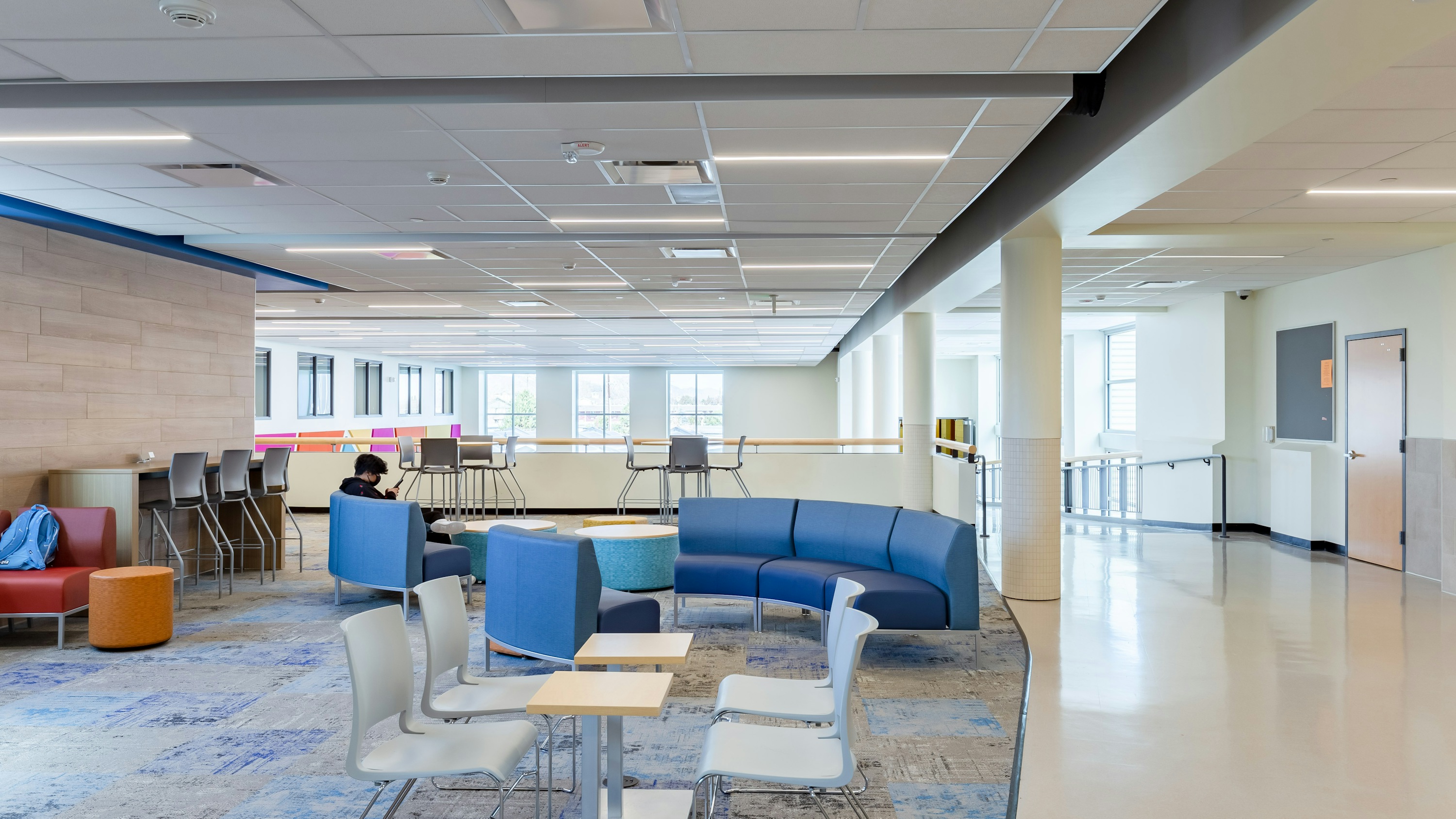

At Wold, we design environments that address the emotional and psychological needs of the people who use them. In education settings, that means building equitable environments for all students, especially in underserved areas, that reduce stress, improve self-regulation and create a stronger sense of belonging.
Our design approach centers on the understanding that every student comes from different home circumstances with varying levels of resources. Some have individualized education programs, while others lack consistent support or are at risk of not graduating. Our goal is twofold. For students, we seek to help close gaps they may carry into the classroom, allowing them to focus on learning while at school. For communities, we design spaces that meet fundamental human needs and serve as lasting, shared spaces.
A 2025 study found that student-reported accounts of a positive school climate at baseline were strongly associated with reduced depression and stress, improved self-esteem and better academic performance. These findings reinforce what educators and administrators have long recognized: when students feel safe and valued, they thrive.
Drawing from our national expertise in healthcare settings, Wold applies human-first principles to create inclusive educational environments that support instruction and student wellness.
Design in education is not a passive backdrop, but an early intervention tool. The physical environment of a school has a direct impact on how students feel, behave and engage with learning. Poorly considered spaces can overwhelm and overstimulate, creating unnecessary barriers, while thoughtful design can reduce triggers, ease anxiety and support regulation.
A holistic approach recognizes that schools must respond to students’ emotional, physical and social needs at the same time. A well-designed school becomes a stabilizing force where students can stay engaged. Spaces that are designed to serve multiple roles, from quiet refuge to collaborative hub, give educators the flexibility to support a wider range of learners and circumstances throughout the day.
These principles come to life through intentional choices in furniture, lighting, texture and color that promote choice, safety and predictability. When students have environments that feel supportive, they are better equipped to engage, connect and succeed at school.
No two school communities face the same challenges. Wold partners with districts to uncover gaps that limit equitable experience and design solutions that close them. The process begins with a student-first philosophy, but for at-risk populations, we integrate two additional frameworks: behavioral health strategies and trauma-informed care. Normative design, derived from trauma-informed principles developed by the Centers for Disease Control and Prevention (CDC), helps guide the creation of spaces that respond to users’ needs with ethical, social and moral awareness. These six principles anchor our work:
To bring these ideas to life and shape healthier experiences for students and staff, Wold employs four essential strategies:
In many underserved and rural communities, schools serve as a primary access point for essential resources. Families may struggle to find healthcare, nutritious food or clothing, and turn to schools to help meet additional needs.
Wold brings community stakeholders and business partners into the design process early to ensure spaces reflect the lived experiences of communities they serve. District staff, healthcare providers and local service organizations all help us create environments that offer flexibility and long-term adaptability.
For students who lack reliable access to medical services at home or nearby, in-school clinics are often the only way to receive routine and preventive care. On-site clinics eliminate transportation barriers and allow students to receive care where they already spend most of their day. At Park Center High School, a flexible, future-focused health clinic will help address accessibility challenges by offering services like dental and vision care. The design supports clinic hours with an adaptable layout that will allow the space to evolve with community needs. Similarly, at White Bear Lake High School, an established on-site clinic delivers direct access to medical support to ensure students can receive care without leaving the building or sacrificing classroom time.
Hunger creates an immediate barrier to learning. For students who rely on school meals as their primary source of nutrition, consistent access to food is critical to focus, energy and well-being. At White Bear Lake High School, a student-facing food pantry provides reliable access to nutritious options. Schools that incorporate this resource from the start create spaces that can be intentionally located for privacy, dignity and ease of access. Through thoughtful design, schools can be safe, stigma-free environments where students who face food insecurity can get what they need without feeling singled out.

Schools also serve as trusted sites for a wide range of wraparound supports, from mental health counseling to clothing resources and community programming. These services are especially vital for students whose families cannot access or afford them elsewhere, making the school a lifeline for their overall stability and success. Alameda Junior/Senior High School integrated multiple wraparound resources, including a clothing and food pantry and mental health counseling. These solutions went above and beyond the district’s standard program, and so the design required careful and creative adaptation to ensure the spaces could support community-wide needs.
Other schools have taken similar steps. At Mora High School, a free clothing store supports students year-round. In the Sheridan School District, widespread investments in school updates, libraries and CTE programs expanded equitable access and built a stronger local workforce pipeline. Boulder Valley’s Justice High School was redesigned to level the student experience with the rest of the district by prioritizing spaces that support smaller class sizes, IEPs and specialized programs for credit recovery, and above all, helped build community.


When educational environments honor lived experiences of their students, schools become wellness resources, community centers and powerful tools for equity and long-term success. Human-first, holistic design empowers every learner to find stability and confidence.
Wold’s expertise in creating flexible, future-ready and people-centered environments helps districts offer resources and meet the needs of the whole person, not just the student. To explore how holistic design can transform your schools and strengthen your community, contact Wold to discuss opportunities.